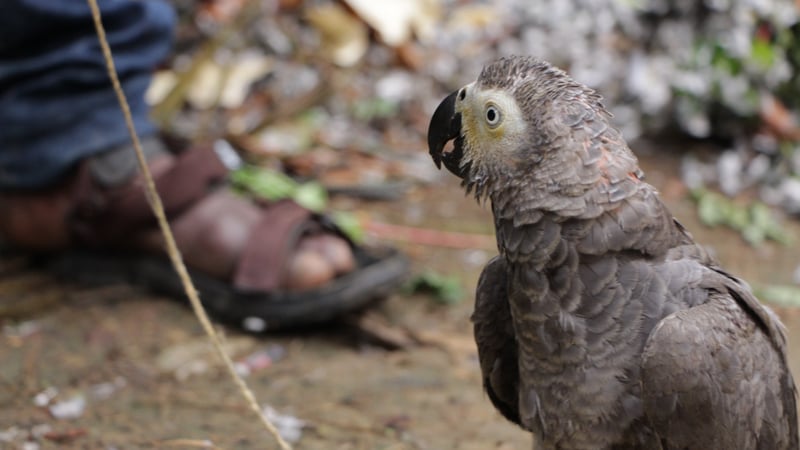
A new report by World Animal Protection exposes how billions of wild animals endure neglect and exploitation in the global trade for pets, fashion, food, medicine, and tourism.
London, UK – 3 December 2025 - World Animal Protection reveals a shocking global disregard for the welfare of wild animals traded legally and illegally as pets, food, fashion, traditional medicine ingredients, and tourist entertainment.
Each year, billions of wild animals are captured from their natural habitats or bred in cruel, overcrowded conditions, all to feed consumer demand and generate profit. The report uncovers how this multi-billion-dollar industry inflicts immense suffering.
The Hidden Cruelty Behind the Global Wildlife Trade examines the welfare impacts on 13 types of wild animals caught up in this grisly trade. Poor welfare is rife throughout every stage of the wildlife trade, from wild capture or captive breeding, to transportation, holding, captivity, harvesting and slaughter.
Released as delegates convene for the 20th meeting of the Convention on International Trade in Endangered Species of Wild Fauna and Flora (CITES CoP20), the report highlights how the welfare and suffering of individual animals remains overlooked in global discussions focused on regulating the trade. The commercial wildlife trade continues to grow, driven by the rising global demand for wild animals for a range of uses.
The research shows that many wild animals in trade experience poor health, pain, fear and distress, with evidence of extreme thirst and hunger, sickness and exhaustion as animals are caught, bred and kept in unsuitable conditions:
- In the pet trade, ball pythons, zebrafish and African grey parrots can endure stress and injury during breeding, capture and transportation.
- In traditional medicine, sharks and pangolins often suffer from slow and painful deaths, while Asian bears can endure painful bile collection procedures for decades on farms.
- In the food trade, crickets and frogs are kept in crowded conditions, often subjected to inhumane slaughter methods, causing unnecessary suffering.
- In the fashion industry, crocodiles farmed for their skins can experience distress due to restricted movement and may experience excruciating pain during slaughter, while mink spend years in barren cages suffering cruel treatment.
- In tourism, captive lions, elephants, and dolphins are deprived of the close family bonds and social structures they depend on for their welfare.
Despite growing scientific evidence that animals can experience a range of emotions, from joy to pain and fear, welfare is still frequently overlooked throughout wildlife trade practices and in global trade-related policies and frameworks.
The scale of suffering is vast: around 100,000 live ball pythons are legally exported from West Africa every year for the pet trade; more than 1.3 million wild-caught grey parrots were exported for the pet trade from 1975 to 2016; an estimated 63 to 273 million sharks and rays are killed each year, many for the shark fin trade with de-finned sharks suffering a slow and painful death; and in 2019, at least 195,000 pangolins were trafficked for their scales for use in traditional medicine, with some reportedly boiled alive for scale removal.
Wild animals deserve better. They suffer massively at every stage of the commercial wildlife trade, and whilst that feels a million miles away from any of our lives, it’s not.
If you go on holiday and bathe with an elephant, if you buy a wild animal as a pet or fashion featuring exotic skins or furs, if you use a traditional medicine containing wildlife parts, or eat a wild animal served as a delicacy, you are contributing to the continued cruel exploitation of wild animals.
We all have a critical role to play in reducing the demand for these industries - so that pangolins aren’t boiled alive, so that elephants aren’t broken into submission, and dolphins don’t languish in small concrete tanks. Wild animals are not ours to exploit. Governments must ensure that animal welfare is built into laws and international agreements so that animal protection is never an afterthought.
Short-term, welfare-focused reforms can help to reduce suffering. However, in the long-term, there is an urgent need to shift away from the consumptive use of wild animals altogether. This means reducing and redirecting consumer demand toward non-consumptive, wildlife-friendly alternatives that recognise animals as sentient beings rather than commodities.
Alongside this, formal recognition of animal sentience in global agreements like CITES and the CBD (Convention on Biological Diversity) would provide a vital ethical and scientific basis for decision-making, ensuring that animals’ capacity to feel and experience is properly considered. CITES is a key global platform for regulating trade in endangered species, but has consistently overlooked the welfare of traded animals. Our report shows this must change urgently.
ENDS
Notes to Editors
1. The global commercial trade is a far-reaching and profit-driven enterprise with estimates of nearly 54 million wild vertebrates and 36.5 million invertebrates exported worldwide. A number recognised to be vastly underestimating the true numbers.
2. CITES (the Convention on International Trade in Endangered Species of Wild Fauna and Flora) is an international agreement between governments. Its aim is to ensure that international trade in specimens of wild animals and plants does not threaten the survival of the species.
3. The CITES COP meets every three years, with the latest Conference of Parties (CITES COP20) taking place in Uzbekistan from 24 Nov – 5 Dec, 2025. This major international meeting is attended by 185 countries (‘Parties’), along with many observers. World Animal Protection will have a delegation at the meeting.
4. Images HERE
For media enquiries and interview requests, please contact: Angela Stevenson – Email: angelastevenson@worldanimalprotection.org
World Animal Protection is the global voice for animal welfare. Since 1950, we have been moving the world to protect animals through evidence-based advocacy, community engagements, and partnerships. Our vision is a world where animals live free from cruelty and suffering.
Latest news
-
Poll warns South Africa against captive lion industry reversal
News
A new poll shows 70 percent of tourists would avoid South Africa if it reverses its captive lion...
-
China drops cruel macaque execution act after global outcry
News
A Chinese tourist site has halted a disturbing macaque execution performance after widespread public criticism and animal welfare...
-
China lion attack injuring child fuels push for safer...
News
An incident of a girl injured by lions at a China zoo has raised the risks of close...
-
Nicaragua’s rise in exotic animal trade threatens biodiversity
News
Over 11,000 wild animals were exported from Nicaragua in one month, raising concerns for welfare, biodiversity, and public...