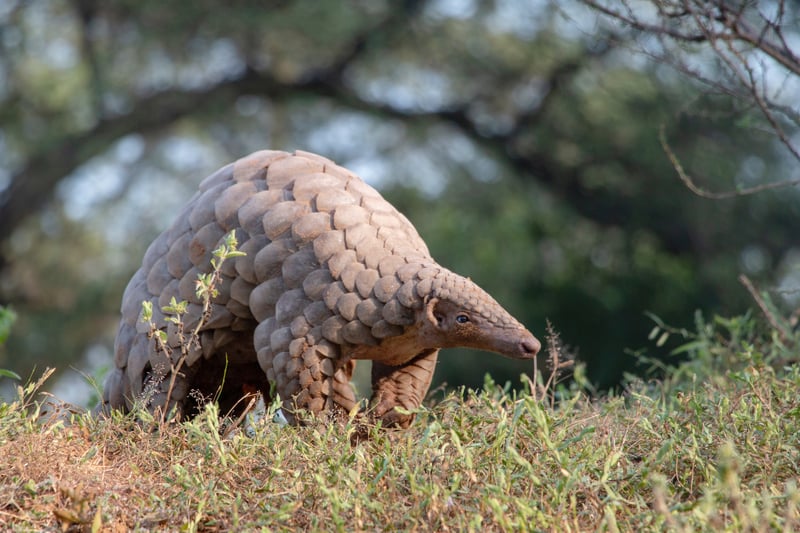
All eight of the world’s pangolin species are facing extinction. Poaching, the illegal wildlife trade, habitat loss, and exploitation continue to threaten these shy, unique animals across Africa and Asia.
But pangolin conservation is about more than preventing extinction. It’s also about protecting these mammals from cruelty and giving them the chance to live safely in the wild, where they belong.
Here, we explore why pangolin conservation matters, what conservation efforts look like on the ground, and how you, too, can help protect pangolins.
Why pangolin conservation matters
Pangolins play a vital role in the ecosystems we all depend on. As natural pest controllers, they feed on ants and termites, helping regulate insect populations across forest and grassland habitats. When pangolin populations fall, those ecosystems become unbalanced. Protecting pangolins means protecting the wider natural world.
But pangolin conservation is about more than biodiversity. It’s also about giving individual animals the chance to live safely in the wild, free from cruelty.
Pangolins are known as the world’s most trafficked mammal, and that title tells a devastating story. Demand for their scales and meat drives illegal trade across Africa and Asia, pushing pangolins closer to extinction.
Despite international bans on commercial trade, poaching continues because trafficking networks remain profitable and demand remains high. They’re poached in forests, smuggled across borders, and sold before pangolin conservation efforts can intervene. The scale of the crisis is urgent, but it is not inevitable.
Pangolin conservation status
All eight pangolin species are threatened with extinction, with three (the Sunda pangolin, the Philippine pangolin, and the Chinese pangolin) listed as critically endangered by the IUCN.
Asian pangolins, including the Chinese and Sunda pangolin, have declined by more than 90% in just a few decades, showing just how quickly exploitation can devastate populations.
There have been some encouraging steps forward, including recent updates to China’s official pharmacopoeia to remove pangolin scales and medicines containing pangolins as raw ingredients. While these actions aren’t perfect, they do show that policy change is possible and that pangolin conservation efforts can challenge demand through evidence, advocacy, and public pressure.
Of course, pangolin conservation can’t be boiled down to just laws and policy. It also depends on what happens on the ground, including whether poachers are stopped, live pangolins are rescued in time, habitats remain safe, and communities and governments have the tools to protect them. That’s why real-world pangolin conservation efforts matter so much.
Global pangolin conservation projects
Pangolin conservation projects take many forms, but the most effective ones usually include:
- Investigations into wildlife crime
- Cooperation with police and government agencies
- Rescue and rehabilitation of live animals
- Habitat protection
- Campaigns to reduce demand for pangolin products
This kind of multifaceted approach matters because pangolin face threats at every stage of the trade. Some are poached in forests, some are trafficked alive, and others are killed before they can ever be rescued. Strong conservation projects aim to intervene as early as possible, increasing the chances of saving live animals and reducing the profitability of the trade.
At World Animal Protection, our work with Jakarta Animal Aid Network (JAAN) in Indonesia is an example of this model in action.
This pangolin conservation project directly tackles the illegal pangolin trade by targeting poachers, rescuing live animals, rehabilitating them, and releasing healthy individuals back into protected forest areas.
Pangolin conservation in Indonesia
Indonesia is a key place for pangolin conservation. It’s home to the critically endangered Sunda pangolin and is the largest supplier of wildlife products in Asia. The country’s geography and maritime trade routes make it a major source, destination, and transit point for wildlife trafficking.
That’s why World Animal Protection is supporting JAAN’s work there. JAAN is a long-established Indonesian animal protection organisation that works closely with the Indonesian National Police to tackle wildlife crime.
JAAN brings significant experience to this work. Since 2013, the organisation has helped arrest and sentence 143 wildlife traders. In 2024 alone, its team helped save 538 animals from the illegal wildlife trade, including three pangolins.
Central to JAAN’s detection work is its K9 anti-poaching unit, a team of trained sniffer dogs that detect illegally smuggled wildlife in vehicles and at key transport routes around Indonesia’s major seaports. For pangolins being secretly transported alive, the K9 unit’s ability to detect them before they cross borders can mean the difference between life and death.
Protecting pangolins with a new pangolin conservation project
Building on that wider experience, World Animal Protection is now supporting a dedicated pangolin conservation project with JAAN. The new project has three main phases: investigation, arrest, and release.
First, JAAN’s team goes undercover to gather intelligence on poachers and wildlife traders. Then, working with police and local authorities, they help identify hotspots, confiscate animals, and support arrests. Any live pangolins rescued are taken to JAAN’s rescue centre for treatment, monitoring, and rehabilitation. If rescued pangolins are strong enough after recovery, they can be returned to the wild.
What makes this project different from many previous seizures is its focus on intervening before animals enter the deeper stages of the trade. By targeting poachers at the source, JAAN's team gives rescued pangolins a genuine chance of survival and, ultimately, a return to the wild. Every arrest helps disrupt the supply chain and sends a clear message that poaching carries real consequences.
Releasing pangolins into the wild
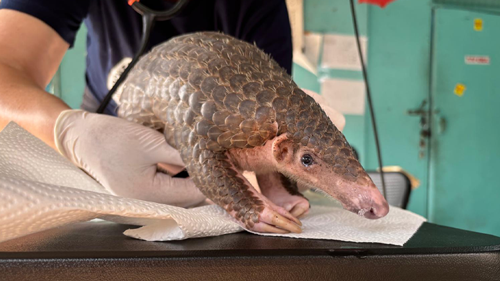
For rescued pangolins, the journey doesn’t end at the rehabilitation centre. After rescue, pangolins are brought to JAAN’s rehabilitation centre in Lampung in southern Sumatra, where they receive veterinary treatment, specialist care, and the time they need to recover. Their health and behaviour are closely monitored, and they’re only considered for release when they’re strong enough.
Release sites are carefully chosen in cooperation with Indonesia’s Ministry of Environment, prioritising protected forest areas where anti-poaching patrols are active and local communities act as guardians of the land.
These careful and considered pangolin conservation efforts gave two pangolins, Amba and Peter, a second chance at life.
Amba and Peter’s rescue and release story
Amba was rescued from a specialist poacher who was arrested during the seizure of 80 kg of pangolin scales, and Peter was confiscated from an illegal wildlife trader with another pangolin that, sadly, did not survive.
Over several months of rehabilitation, both pangolins recovered and were cleared for release. On the release day, a five-person expert team, including vets, pangolin handlers, and wildlife crime investigators, conducted final health checks before transporting Amba and Peter to a protected forest area.
At the release site, the two pangolins couldn’t have behaved more differently. Peter stepped out of his transport cage without hesitation, immediately climbing trees and exploring his surroundings with curiosity and confidence. Amba was more cautious, pausing at the entrance of his cage and taking in his new environment. He then slowly and deliberately made his way towards the undergrowth. Pretty soon, both pangolins had disappeared into the forest — exactly the outcome the team had worked so hard to achieve.
Successful release stories like Amba’s and Peter’s are proof of what’s possible when investigations, rehabilitation, and community protection come together. They’re also an important reminder of why pangolin conservation matters. They’re not just statistics. They’re sentient animals that returned to the wild.
You can make a difference for vulnerable animals
Donate now
When you make a donation, you’ll join a passionate group of supporters who are determined to change the world for animals. We're fighting animal cruelty wherever we find it — are you with us?
Click to donateHow to get involved in pangolin conservation
Every pangolin rescue is made possible by people who choose to act. From the undercover investigator who locates poachers, to the veterinary professionals who nurse animals back to health, to the release team that returns them to the wild, every person plays an essential role in pangolin conservation.
When you raise awareness about and donate to World Animal Protection’s pangolin conservation projects, you’re directly supporting JAAN’s team on the ground in Indonesia. Their investigators, sniffer dogs, rehabilitation centres, and release efforts are all supported by your donations.
You're helping give the next pangolin caught in the illegal trade a real chance of making it back to the wild.
Donate to support pangolin conservation
Together, we've already shown that change is possible. Policy is shifting. Poachers are being brought to justice. Pangolins like Amba and Peter are back where they belong. But there is still so much more to do — and we can't do it without you. Conservation work like this depends on people choosing to act.
Related content
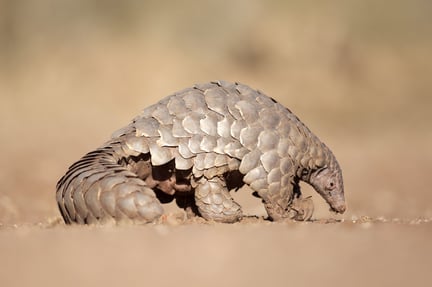
Pangolins
Learn about pangolins, the world’s most trafficked mammal. Discover why pangolins are endangered, the threats they face, and how we can help protect them.
World Pangolin Day
Animal Awareness Days
World Pangolin Day is observed on the third Saturday of February every year to celebrate pangolins and their contribution to the planet's ecosystem.
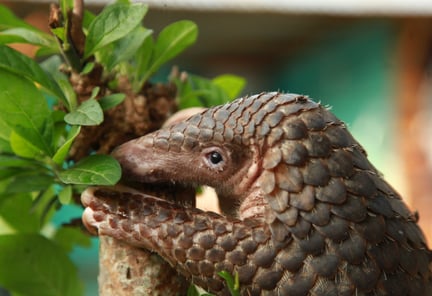
Pangolin Habitat Guide: Where Pangolins Live
Blog
Discover more about the pangolin’s natural habitat, where they live, and how habitat loss threatens their survival. Explore maps and facts about Chinese, African, and Indian pangolins.