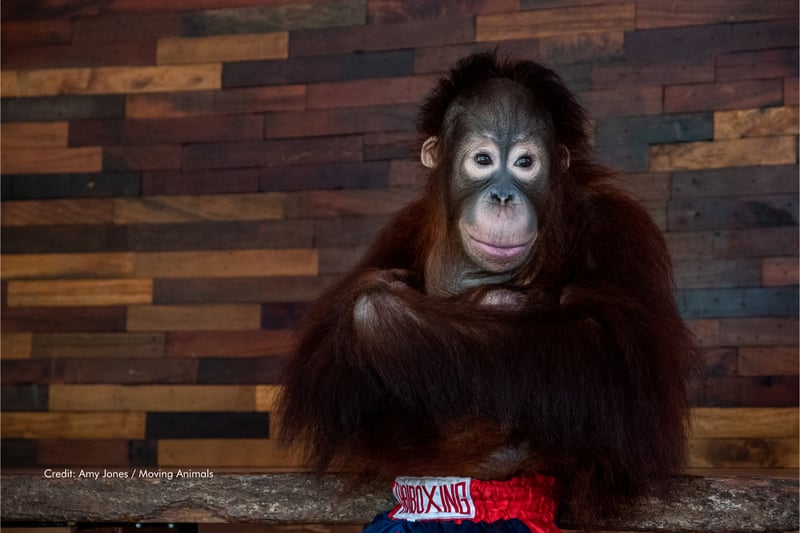
In this blog, we explore why poachers target orangutans, how they’re taken, what happens to orangutans once they leave their forest homes, and what is being done to stop it.
Up to 3,000 orangutans are killed by humans every year. That’s between 8 and 9 per day.
All three orangutan species are critically endangered. And their slow rate of reproduction makes it difficult for orangutan populations to recover.
At this rate of loss, these intelligent creatures, each with their own distinctive personality, could be extinct in the wild in less than 50 years.
The exotic pet trade is one of the primary causes of orangutan deaths.
Why are orangutans going extinct?
Habitat loss poses a major threat to orangutans. Researchers predict that we will lose 45,000 orangutans by 2050 based on habitat loss alone.
The illegal pet trade is another reason for falling orangutan numbers.
The United Nations Environment Programme (UNEP) estimates that 6,000 great apes are captured or killed every year for the illegal pet trade and up to 70% of these animals are orangutans.
Why do poachers target orangutans?
There are three reasons why poachers choose to capture and kill orangutans in Borneo and Sumatra.
- For bushmeat. Orangutans are killed opportunistically for food in Indonesia.
- In retaliation. As their habitats are destroyed, orangutans are more likely to venture into farmland and villages in search of food. Here, they’re killed to prevent crop foraging.
- For the pet trade. Orangutans are captured for the exotic pet trade. Hunters seek out mothers and kill them in order to take their infants. Poaching for the pet trade is one of the main threats to orangutan survival.
Key import hubs for orangutans include Thailand, Malaysia, Singapore, and Taiwan. There’s also demand for orangutans in Europe and the Middle East.
How are orangutans taken from the wild
Mothers are typically killed using guns or machetes. Captors often claim that infant orangutans were “found orphaned” but research shows that this is almost always not the case.
With the mother dead, it’s easier for poachers to snatch the baby. But they’re not always successful.
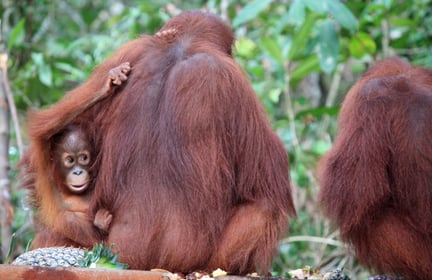
Baby orangutans spend the first two years of their lives clinging to their mothers. So they often fall from the canopy with her. They fall hundreds of feet, landing on the forest floor and sometimes dying from their injuries.
Those who survive are seized and prepared for transit. They’re then smuggled by air, road, or sea. But more orangutans are lost along the way.
These animals build strong attachments, and are capable of learning, memory, and emotional distress. Many die from the stress of being separated from their mothers. Others are lost due to poor welfare conditions in transportation.
What happens to orangutans kept as pets?
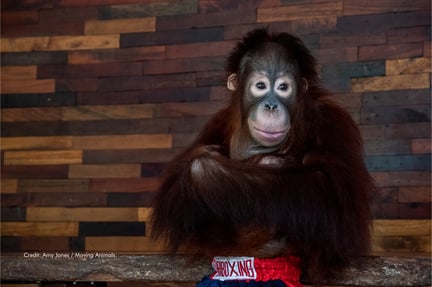
Once taken from the wild, infant orangutans are sold and used as status symbols.
They’re bought as an addition to private animal collections, showcased in closed online groups, and exploited in a bid for social media likes.
But these semi-solitary creatures are not supposed to be kept as pets. And in some cases, apes taken from the wild exhibit unnatural behaviours. They rock and pace. They can even display signs of PTSD and depression.
They quickly become unmanageable for their captors. By age five, an orangutan already has the strength of an adult human male. By maturity, five to seven times that.
Forced into a domestic setting and unable to express their natural behaviours, captive apes can become aggressive and difficult to handle, so owners respond by chaining them up or killing them.
You can make a difference for vulnerable animals
Donate now
When you make a donation, you’ll join a passionate group of supporters who are determined to change the world for animals. We're fighting animal cruelty wherever we find it — are you with us?
Click to donateBut the fight to save orangutans is working
In January 2026, Indonesian officers in East Aceh stopped a truck that was carrying 53 packages, all containing protected wildlife, on its way to Thailand. A live orangutan infant was among the animals found on board.
The bust uncovered an extensive Indonesia-Thailand wildlife trafficking route and ongoing investigations could now put a significant dent in illegal trade between the two countries.
We’re also making progress online, where exotic pets like orangutans are paraded across social media for likes.
The UK’s Online Safety Act of 2023 and the EU’s Digital Services Act, which came into force in February 2024, have introduced hefty fines for the sites and search engines promoting animal cruelty content.
World Animal Protection is part of the Social Media Animal Cruelty Coalition (SMACC), a collection of organisations conducting research into animal cruelty content and helping social media platforms to address it. Over 80,000 links to animal cruelty content were reported to SMACC in 2024 alone.
Together, we’re combating the exotic pet trade from all angles, making it harder for poachers, traffickers, and individuals to exploit wild animals, like orangutans.
How can we help orangutans?
Meet Chocolate.
Chocolate was stolen from his mother and sold into the illegal pet trade. He spent years chained in a village before he was found and rescued.
After years of rehabilitation at the Sumatran Orangutan Conservation Programme (SOCP), Chocolate was released back into a protected rainforest habitat, where he climbed straight into the trees.
This is just one story among many. There are hundreds of orangutans in rehabilitation right now. But they can only take the same journey as Chocolate with our support.
You can help orangutans by donating to fund the rescue, rehabilitation, and release of orangutans through our partners, SOCP and Yayasan Ekosistem Lestari.
Donate to help orangutans today
You can also support orangutans and other wildlife by reporting any animal cruelty content you see on social media. Content like pet orangutan posts, fake rescue videos, or primates dressed as humans. If you see content like this, don’t engage. Instead, copy the link and report it to SMACC and the social platform.
Related content
How World Animal Protection supports animal sanctuaries
Innovative solutions
Discover our work helping venues transform to genuine, ethical animal sanctuaries, and find out how to spot a genuine sanctuary or rescue centre.
World Orangutan Day
Animal awareness days
Held on August 19th, World Orangutan Day is the perfect time to learn more about these great apes, their lives in the wild, and the threats they face.
The Real Responsible Traveller
Your post can make a difference; call out the travel companies still failing wildlife