Discover different types of dolphins, from bottlenose dolphins to pink river dolphins. Learn about their traits, habitats, threats, and why these intelligent, sentient animals need protection.
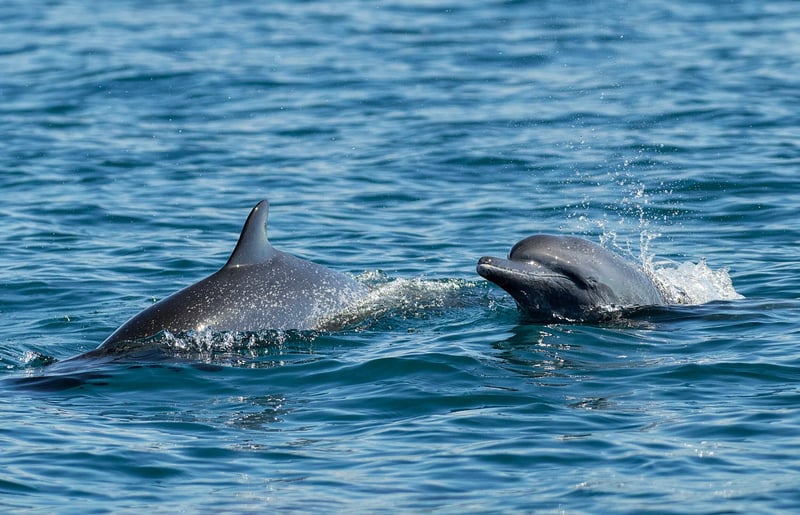
Dolphins are a diverse group of intelligent, social, and sentient marine and freshwater mammals. Different species of dolphins can be found across the planet — in rivers, estuaries, the open ocean, and coastal waters.
Here, we look at a selection of dolphin species, exploring what makes each one unique and detailing some of the threats they face.
Different types of dolphins
There are lots of types of dolphins in the world. Dolphin species vary in size, appearance, habitat, behaviour, and conservation status. Here, we explore a few of the most distinctive dolphin types.
Bottlenose dolphin
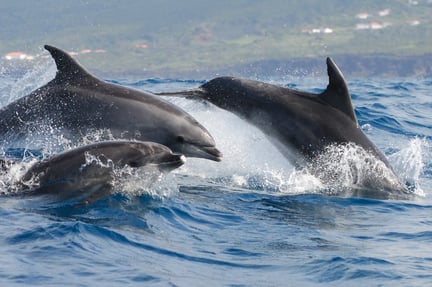
The bottlenose dolphin is one of the most easily recognised animals on Earth. Found in warm, temperate seas worldwide, these highly social and intelligent dolphins live in close-knit groups and communicate using a system of clicks and whistles.
Sadly, bottlenose dolphins are the species most commonly used for dolphin shows and swim-with-dolphin experiences. In captivity, these dolphins experience significant suffering — separated from their families, confined to cramped tanks, and trained to perform using food deprivation.
At World Animal Protection, we believe that every animal has a right to a wild life. That’s why we’re working to protect dolphins and other wild animals from commercial exploitation.
Common dolphin
The common dolphin is one of the most abundant and widespread dolphin species. It’s found in tropical and temperate waters around the world. Both long-beaked and short-beaked common dolphins have distinctive markings that resemble the shape of an hourglass.
The short-beaked common dolphin is particularly social. They gather in groups of around 100 dolphins — and have been known to form common dolphin mega-pods, consisting of up to 10,000 individuals.
Like many kinds of dolphins, the common dolphin faces a number of threats. These include hunting in countries including Russia and Japan, and entanglement in fishing gear, which can cause injury or death.
Spinner dolphin
Spinner dolphins, found in the tropical and subtropical waters around the Pacific Islands and Hawaii, are the ocean’s acrobats. These dolphins leap out of the water and can spin up to seven times in the air before falling back into the sea.
This acrobatic ability makes spinner dolphins a favourite of wildlife watchers — but this popularity comes at a cost.
Many tour operators promote in-water encounters with spinner dolphins. This can disrupt natural dolphin behaviours — particularly their rest cycles, which they need to stay alert to predators and prey.
At World Animal Protection, we’re making it easy for tourists to see marine mammals without causing them harm or suffering. We’re establishing Whale Heritage Areas. These are accredited destinations that meet responsible whale and dolphin watching criteria.
Atlantic humpback dolphin
The Atlantic humpback dolphin is named for the distinctive hump on its back, though otherwise it looks a lot like the bottlenose dolphin.
It’s a mysterious creature and one of the least understood dolphin species, despite living close to humans in shallow waters along the west coast of Africa, from Morocco to Angola.
This species is critically endangered, with just 1,500 mature individuals left in the wild. Bycatch is a significant threat, as is coastal development, which creates noise pollution and physical barriers that disrupt the dolphins’ movements and behaviours.
Risso’s dolphin
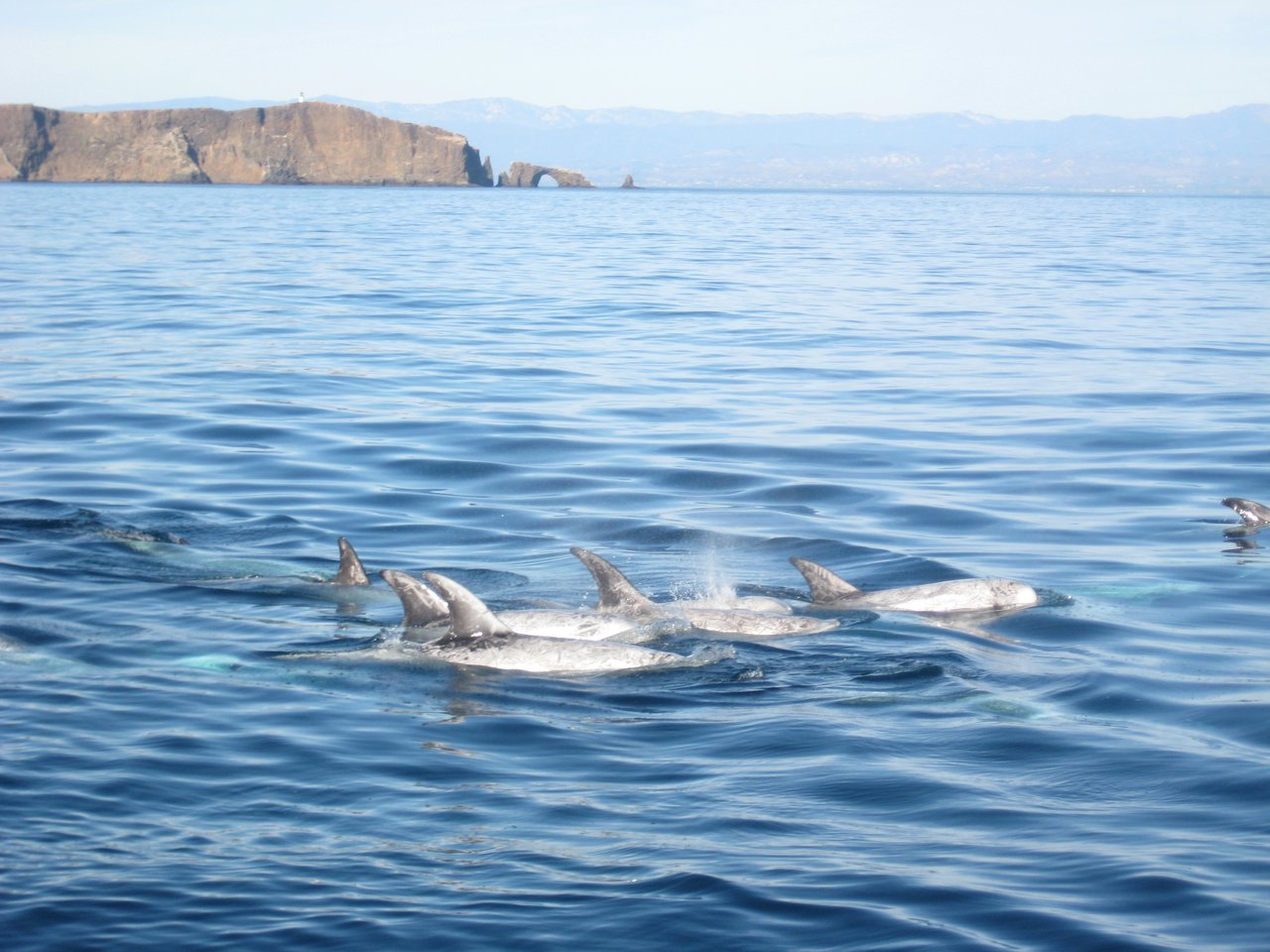
Risso’s dolphins are easy to spot. They have blunt, rounded heads and heavily scarred grey bodies. Those scars come from scuffles with prey and from teeth raking, a common social behaviour among dolphins.
These dolphins are found in deeper temperate, subtropical, and tropical oceans worldwide, where they primarily feed on squid.
Risso’s dolphins are hunted for their meat and oil in Indonesia, Japan, the Caribbean, Sri Lanka, and the Solomon Islands. They’re also impacted by ocean noise pollution and fishing gear entanglement.
Atlantic white-sided dolphin
Atlantic white-sided dolphins are recognised by their dark grey, light grey, white and tan-coloured markings. They live in temperate waters in the North Atlantic Ocean.
White-sided dolphins are legally hunted as part of the Faroe Islands Grindadrap, a traditional whale and dolphin hunt. Nearly 1,430 white-sided dolphins were caught and killed in a single day in September 2021.
At World Animal Protection, we’re lobbying the Faroese government to ban cetacean hunting. We’re also raising awareness of marine mammal sentience and exposing the suffering that hunted dolphins endure.
Amazon River dolphin (pink river dolphin)
Yes, pink dolphins are real! The Amazon River dolphin — also known as the boto — is the largest freshwater dolphin in the world. It’s found in the Amazon and Orinoco river basins and is known for its distinctive pink colouring.
These dolphins are curious and intelligent. Males have been observed picking up objects — sticks, branches, clumps of grass — and thrashing them on the water’s surface in a bid to attract females.
World Animal Protection has long campaigned to protect pink river dolphins from illegal hunting (pink river dolphins are killed for use as fishing bait) and from exploitative tourist activities, including selfies and swim-with-dolphin experiences.
Ganges River dolphin
Found in river systems across India, Nepal, and Bangladesh, the Ganges River dolphin is uniquely adapted to its murky freshwater environment. It has such poor eyesight that it’s often called the blind dolphin. It navigates, hunts, and communicates almost entirely through echolocation.
Like other river dolphins, the Ganges River dolphin relies on a healthy river ecosystem. Dams fragment their habitat, fishing nets cause entanglement, and pollution — including underwater noise from riverfront development — continues to threaten their survival.
Hector’s dolphin
Hector’s dolphin lives exclusively in the coastal waters around New Zealand. It’s one of the world’s smallest dolphins, measuring just 120-150 centimetres from tip to tail. And it has a rounded dorsal fin — black, like its head, tail, and flippers.
Hector’s dolphins are endangered. They face threats from entanglement, pollution, vessel traffic, and habitat loss. A subspecies — the Maui dolphin — is critically endangered. According to the IUCN, fewer than 50 mature Maui dolphins remain in the wild.
You can make a difference for vulnerable animals
Donate now
When you make a donation, you’ll join a passionate group of supporters who are determined to change the world for animals. We're fighting animal cruelty wherever we find it — are you with us?
Click to donateAre whales and porpoises types of dolphins?
Dolphins, porpoises, and whales all belong to the same group of mammals: cetaceans. But splitting them into categories isn’t as straightforward as you might imagine.
What’s the difference between dolphins and porpoises?
Dolphins and porpoises look very similar. They’re both intelligent aquatic mammals, with large, complex brains. But they’re distinct animals from different animal families.
Dolphins are generally bigger than porpoises. Most dolphins have a beak, while most porpoises have a rounded head. And while dolphins have pointed teeth, porpoises have teeth shaped like spades.
Are whales dolphins?
All dolphins are classed as toothed whales. But not all whales are dolphins. Baleen whales — filter-feeding whales like the blue whale and Rice’s whale — aren’t part of the dolphin family. Nor are sperm whales, beluga whales, or narwhals.
Are orcas dolphins?
Yes. Some animals we think of as whales — like orcas and pilot whales — are actually part of the dolphin family. Orcas are the largest dolphin species.
Help us protect dolphins
Dolphins are sentient wild animals. They form friendships, grieve, play, and teach their young — and they have a right to live freely in the wild.
But across the world, dolphins face serious threats, from hunting, captivity, habitat loss, pollution, the fishing industry, and exploitative tourism.
Dolphins need our protection. Here’s how you can help:
-
Avoid dolphin shows and swim-with-dolphin attractions. If you want to see dolphins in the wild, choose responsible wildlife experiences, where you can observe dolphins from a respectful distance.
-
Learn more about dolphin sentience and protection. Then, share what you find. (Our Dolphin Hub is a great place to find dolphin news, reports, and campaigns.)
-
Raise awareness of dolphin intelligence, behaviours, and threats on World Dolphin Day and Freshwater Dolphin Day.
-
Sign up to the World Animal Protection newsletter to follow our campaigns, including our work to end the commercial exploitation of wild animals and to establish sea sanctuaries for rescued dolphins.
You can also help dolphins by making a donation. Your support allows us to protect dolphins and their habitats, lobby for stronger protections, and raise awareness of dolphin sentience and threats.
Types of dolphins FAQs
How many types of dolphins are there?
There are more than 30 species of dolphins. Dolphins are found in every ocean in the world. They also live in rivers, estuaries, and coastal areas.
What is the most common type of dolphin?
The common dolphin is one of the most abundant dolphin species in the world. It’s found in subtropical and temperate oceans globally.
What is the rarest type of dolphin?
The Maui dolphin is widely considered the rarest type of dolphin. A subspecies of Hector’s dolphin, the Maui dolphin lives off the coast of New Zealand, and there are fewer than 50 mature individuals remaining in the wild.
Are river dolphins real?
Yes, river dolphins are real. Several dolphin species live entirely in freshwater rivers. These include the Amazon River dolphin, the Ganges River dolphin, the Irrawaddy dolphin, and the Indus River dolphin.
What types of dolphins are endangered?
Many dolphin species are endangered or even critically endangered. Endangered dolphin species include the Irrawaddy dolphin, Hector’s dolphin, the Ganges River dolphin, and the Atlantic humpback dolphin.
Related content
World Dolphin Day 2026 | World Animal Protection
Celebrate World Dolphin Day 2026 and learn how to protect dolphins worldwide. Join World Animal Protection and take action today to defend dolphin species.
Running free, sponsored by captivity?
Blog
From coastline races to captive dolphin shows, a contradiction sits at the heart of TUI-sponsored marathons in Palma, Rhodes and Cyprus.
Sea Sanctuaries Explained
Sea sanctuaries provide a humane alternative to marine parks, allowing dolphins and other marine mammals rescued from captivity to live in protected ocean environments