Thousands of sheep and goats drown after live export ship sinks near Oman
News
Around 4,000 sheep and goats have died after a live export ship caught fire and sank off the coast of Oman, with the animals trapped on board and unable to escape. The incident has renewed calls to end the live export of animals due to the serious risks to their welfare.
Around 4,000 sheep and goats have died after a live export ship sank off the coast of Oman, in yet another deadly incident involving the global live animal trade.
The vessel, MSV Haji Ali, was travelling from Berbera in Somalia to Sharjah in the United Arab Emirates when a fire broke out on board. The ship later sank.
All 14 crew members were rescued by the Oman Coast Guard. The animals on board were left behind. Trapped below deck, the sheep and goats are believed to have died from drowning, smoke inhalation or the fire itself.
With no way to escape, they would have faced panic and distress in their final moments. The exact cause of the fire is still under investigation.
A horrific end for animals trapped on board
For the animals on the ship, there was no way out.
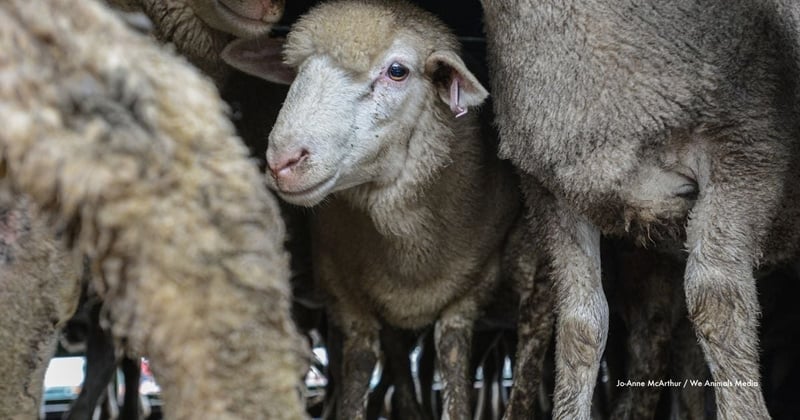
Confined in crowded conditions typical of live export journeys, they were unable to move freely or reach safety as the situation worsened. As the fire spread and the vessel began to sink, thousands were left to die.
The sinking of the MSV Haji Ali off the coast of Oman, which is reported to have killed around 4,000 sheep and goats, is a devastating reminder of the inherent cruelty and risks of the live animal trade.
These animals endured unimaginable suffering in their final moments - confined and unable to escape. This sadly, is not an isolated accident, every year, millions of animals are transported long distances across oceans in overcrowded and stressful conditions, where they are exposed to extreme heat, disease, injury, exhaustion, and death.
Live export should no longer be an option.
You can make a difference for vulnerable animals
Donate now
When you make a donation, you’ll join a passionate group of supporters who are determined to change the world for animals. We're fighting animal cruelty wherever we find it — are you with us?
Click to donateA trade that puts animals at risk
Transporting animals long distances by sea exposes them to a range of serious animal welfare risks.
On these journeys, animals can face extreme heat, overcrowding, exhaustion and disease. Even under normal conditions, many do not survive the journey.
Last year saw the catastrophic situation aboard the Spiridon II, where thousands of cows were trapped at sea. Many gave birth or died whilst being stranded.
Routes to the Middle East can be especially dangerous, with high temperatures putting animals under severe stress. Long voyages also increase the risk of injury, illness and death.
Calling for an end to live export
The deaths of thousands of sheep and goats off the coast of Oman have again brought attention to the realities of the live export trade.
Millions of animals are shipped around the world every year, enduring long journeys in conditions that can compromise their health and welfare.
World Animal Protection, along with other organisations, is urging governments to end live export and invest in alternatives that do not rely on transporting animals over long distances.
Related content
Factory Farming Quiz: Test Your Knowledge
Test your knowledge with our factory farming quiz covering animal welfare, sustainability, environmental impact, and modern food systems.
15 Amazing Sheep Facts
Blog
Sheep are more intelligent and emotional than you might guess. Read these amazing facts about sheep to learn more about these incredible farm animals.
High animal welfare on farms
No future for factory farming
Find out how we work with the food industry to improve farm animal welfare and keep animals in an environment where they can benefit from a life worth living