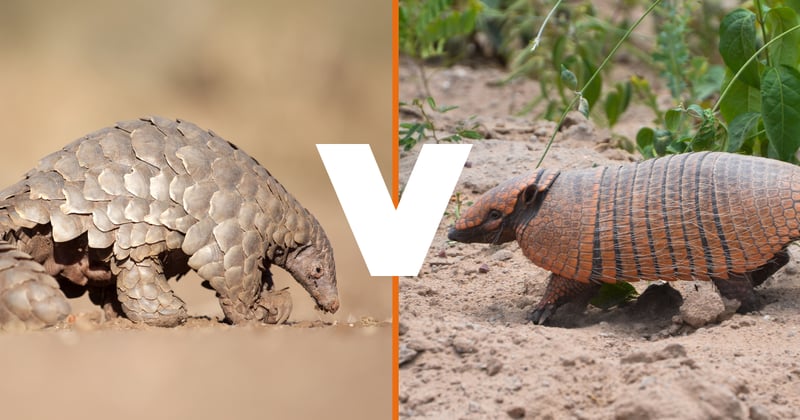
Pangolins are unique mammals with seemingly stolen characteristics from a range of other animals: a similar-looking armour to armadillos, the same long, sticky tongues as anteaters, the insectivorous diet of echidnas, and a shared range with porcupines. But are pangolins actually related to any of these animals?
Let’s compare the pangolin vs. the armadillo, anteater, porcupine, and echidna to discover their shared characteristics and convergent evolution, as we uncover what makes pangolins so unique.
How to identify a pangolin
Before we can compare pangolins vs. anteaters or any other animal, let’s determine what a pangolin actually is.
There are eight pangolin species living across Africa and Asia. They can be found in a wide variety of habitats with reliable supplies of ants and termites, including tropical forests, swamps, thick brush, savannah grasslands, and oil palm plantations.
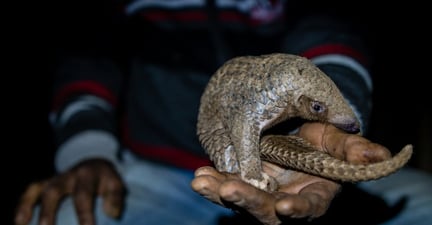
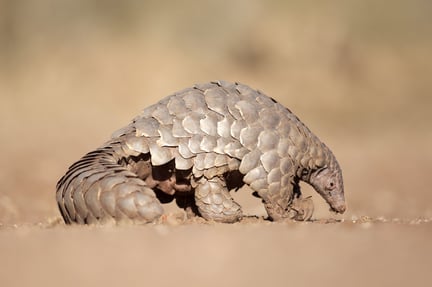
The easiest way to identify these extraordinary mammals is by their unique, brownish keratin scales, which cover their entire bodies, except for the sides of their faces and their underbellies. They’re the only mammals in the world with this feature.
You can also recognise pangolins by their short, conical heads, their elongated snouts, their long, sticky tongues, their five-toed feet with sharp claws, and their prehensile tails. If you can catch a glimpse of their mouths, you might also notice that they don’t have teeth.
How to distinguish a pangolin from similar-looking animals
Pangolins were originally thought to be related to anteaters and armadillos because they look a bit like the anteaters of South America. They’re also often confused with porcupines and echidnas. However, none of these animals are related.
The table below summarises the key differences between pangolins vs. armadillos, anteaters, porcupines, and echidnas.
| Pangolin | Armadillo | Anteater | Porcupine | Echidna | |
|---|---|---|---|---|---|
| Related to | Carnivorous mammals, like dogs, cats, and bears | Anteaters and sloths | Armadillos and sloths | Other rodents | Platypus |
| Physical attributes | Overlapping keratin scales, long snout, long sticky tongue | Bony armor shell, pointed snout, strong claws | Long snout, coarse fur, very long tongue, large claws | Coat of sharp quills | Spines, long snout, strong claws |
| Range and habitat | Asia and Africa | North, Central and South America | Central and South America | Africa, Europe, Asia (Old World Porcupine), North and South America (New World Porcupine) | Australia, Tasmania, and New Guinea |
| Diet | Ants, termites, and larvae | Termites, insects, vegetation, small animals, and carrion | Ants and termites | Herbivorous | Ants, termites, worms, and larvae |
| Threats | Illegal wildlife trade, traditional medicine, and habitat loss | Roadkill, habitat loss, and fragmentation | Climate change, wildfire, roadkill, habitat loss, and tourism | Human-wildlife conflict and roadkill | Climate change, wildfire, habitat loss, and feral predators |
Let’s explore these differences in more detail.
Pangolin vs. armadillo
Pangolins, which get their name from the Ancient Greek word meaning ‘clad in scales’, are often confused with armadillos, known as the ‘little armoured ones’ in Spanish — and, based on their names and similar appearances, it's easy to see why they might be.
But they actually have several distinct features. Key differences found when comparing pangolins vs. armadillos include:
- Their armour: Pangolins boast flexible, overlapping scales made of keratin (the same protein found in human fingernails and hair), whereas armadillos have a set of plates called the carapace. These are made of bone and covered with tough keratinous scutes.
- Their defensive behaviour: While all eight species of pangolins curl into a ball to protect their soft underbellies and present erect scales to an enemy, only the three-banded armadillo acts similarly. Most armadillo species run away, burrow, or claw attackers.
- Their habitat: While both animals can be found in grasslands and forests, Pangolins live across Africa and Asia. Meanwhile, armadillos are found mainly in Central and South America. Armadillos also exclusively live in burrows, whereas some pangolins live in trees.
- Their diet and eating habits: Both pangolins and armadillos eat ants, termites, and larvae, but while armadillos have teeth to chew their food, pangolins have to swallow small stones (known as gastroliths) to grind food. Pangolins also have distinctive, long, sticky tongues to catch these insects, whereas armadillos have to dig and root to find food.
- Their threats: Habitat loss and fragmentation due to deforestation, land use change, and agriculture are the main threats to armadillos. Pangolins are also threatened by habitat loss, but the illegal wildlife trade and traditional medicine are their biggest threats.
Pangolin vs. anteater
Pangolins are sometimes called ‘scaly anteaters’ because they share a similar diet and adaptations. They’re both strictly insectivorous, meaning they exclusively eat ants and termites. They also both have elongated skulls, large claws, no teeth, and long, sticky tongues (though an anteater’s can be up to 60cm long, while a pangolin’s is only 25cm).
However, the similarities between pangolins vs. anteaters end there. Anteaters are covered in coarse fur rather than scales, live in South and Central America, not Africa and Asia, and are closely related to sloths and armadillos rather than to cats, dogs, and bears.
Porcupine vs. pangolin
The most striking similarity between porcupines vs. pangolins is their defence mechanism. When threatened, both curl up into a ball to protect their soft underbellies and present erect, keratin-based ‘armour’ to their enemy. However, a pangolin’s armour consists of scales, while a porcupine’s includes over 30,000 quills.
Old World porcupines share similar territory to pangolins, as both are found in Africa and Asia. However, these porcupines also inhabit Europe, and New World porcupines live in North and South America.
The biggest difference between porcupines vs. pangolins is their diet. The former are herbivorous and feed on plants, fruits, leaves, roots, and bulbs, while the latter are insectivores.
Echidna vs. pangolin
If you compare echidnas vs. pangolins, you’ll notice that both are mammals that eat an insect-based diet. They share other key traits, such as their long, sticky tongues, strong digging claws, and lack of teeth, but they also have important biological differences.
- Their reproduction: Pangolins give birth to live young, whereas echidnas are monotremes or egg-laying mammals.
- Their habitat: Pangolins live in Africa and Asia, while echidnas can be found in Australia, Tasmania, and New Guinea.
- Their appearance: Pangolins have scales, short, conical heads, and elongated snouts. These contrast with echidnas’ spines and tubular beaks.
- Their ancestry: Echidnas are closely related to the platypus (the only other monotreme mammal), while pangolins are more closely related to cats, dogs, and bears.
You can make a difference for vulnerable animals
Donate now
When you make a donation, you’ll join a passionate group of supporters who are determined to change the world for animals. We're fighting animal cruelty wherever we find it — are you with us?
Click to donateWhy pangolins are unique
Comparing pangolins vs. armadillos, anteaters, porcupines, and echidnas reveals that these animals share many physical and dietary characteristics.
However, pangolins are unique in two important ways:
- Pangolins are the only mammal in the world to boast an armour of keratin scales.
- Pangolins are the most trafficked mammal in the world, targeted for their scales.
Sadly, demand for pangolin scales in traditional medicine continues to drive poaching and trafficking across the globe, with around 8.5 million pangolins lost to the illegal wildlife trade in recent years.
At World Animal Protection, we are working to end this exploitation and protect pangolins.
How to help protect pangolins
You can help us protect pangolins by supporting our efforts to end demand for pangolin scales in traditional medicine. Help us promote wildlife-friendly alternatives and join our calls for stronger laws to tackle illegal wildlife trade. Together, we can protect pangolins.
Related content
World Pangolin Day
Animal Awareness Days
World Pangolin Day is observed on the third Saturday of February every year to celebrate pangolins and their contribution to the planet's ecosystem.
What Are Pangolin Scales Used For?
Blog
Discover what pangolin scales are used for, why they’re traded, and the impact on pangolins. Learn the truth behind traditional medicine claims and wildlife trade.
Pangolins
Learn about pangolins, the world’s most trafficked mammal. Discover why pangolins are endangered, the threats they face, and how we can help protect them.