Whale Heritage Areas
Heritage Sites
World Animal Protection in partnership with World Cetacean Alliance recognise outstanding destinations for responsible wild whale and dolphin watching
Animal Awareness Days
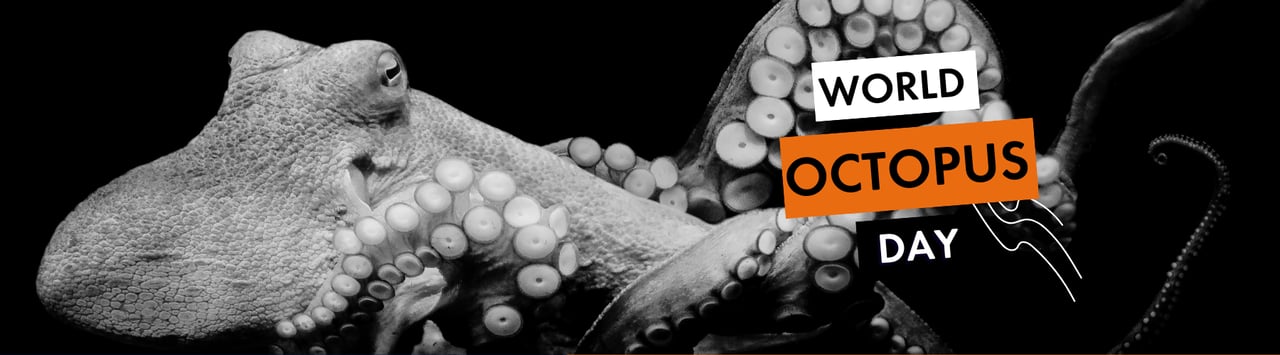
Octopuses are incredibly intelligent and charismatic animals, found in every ocean on Earth.
This World Octopus Day, learn about these magnificent, many-armed marine creatures, and find out what you can do to help them.
World Octopus Day (also known as National Octopus Day, International Octopus Day and Octopus Appreciation Day) is celebrated on the 8th of October every year. It’s a celebration of one of the most distinctive marine creatures on the planet.
The day draws attention to the beauty, intelligence, and sentience of octopuses. It’s also a chance to highlight the threats octopuses face, including octopus farming and marine pollution.
While octopuses are not considered endangered, they face a number of threats.
Octopuses are sensitive to water quality and water temperatures. They’ve been known to ingest plastic waste in the ocean, which can impact their health.
Octopuses are targeted by fishers across the world as a source of meat and for use in the aquarium trade. This has led to unsustainable and, sometimes, illegal fishing practices, and the use of destructive fishing methods.
While some countries, like Chile, are moving to ban commercial octopus farming, others are planning to expand the industry. In Galicia in Spain, for example, an experimental octopus hatchery was approved in 2025.
If you’re here on the 8th of October, Happy World Octopus Day! Protecting octopuses from the threats they face is a great way to celebrate.
Here are some of the top things you can do to protect octopus species around the world.
Many animals need your help. Find out about other animal awareness days.
Donate now
When you make a donation, you’ll join a passionate group of supporters who are determined to change the world for animals. We're fighting animal cruelty wherever we find it — are you with us?
Click to donateCalamari is the Italian word for squid. So when you see calamari on a menu, it’s squid that’s being served.
People around the world also eat octopus, particularly across East Asia and the Mediterranean. But scientists argue that we should avoid eating farmed octopuses for environmental and ethical reasons.
Octopuses mainly eat crabs and lobsters. They tend to hunt at night, pouncing from above, using their beaks to inject venom, and wrapping their prey in the webbing between their arms before pulling it into their mouths.
Octopuses are highly intelligent and sentient beings with thoughts, feelings, and individual personalities. They can solve puzzles, use tools, and learn from experience.
Octopuses belong to the invertebrate family and don’t have any bones in their bodies. Instead, they have what’s called a hydrostatic skeleton. This is a fluid-filled muscle system. Other creatures, like jellyfish and earthworms, have these too.
Most octopuses produce ink. They have an ink sac that produces a dark fluid, which they can then eject at speed when threatened. The ink confuses predators and helps the octopus to hide. In some octopus species, the ink also paralyses the sensory organs of the attacker.
Heritage Sites
World Animal Protection in partnership with World Cetacean Alliance recognise outstanding destinations for responsible wild whale and dolphin watching
Blog
Uncover Blackfish's impact on orca captivity, animal welfare concerns, boycotting and SeaWorld's response

Food systems
Whether you choose to go vegan, vegetarian or flexitarian, consuming a few animal products can have a big impact on your health, the planet and animal welfare.

News
World Animal Protection responds to the devastating Nepal floods, addressing the toll on animals and the disaster's link...

News
Projections lit up in Brazil on the eve of JBS's AGM, exposing JBS on animal welfare, deforestation, emissions...
News
European Parliament delays Mercosur deal with court referral, offering advocacy space for animal welfare, One Health and deforestation...
Press release
First-of-its-kind research exposes true global scale of factory farming and its detrimental effects on farmed animals, human health,...