Plans to move Marineland orcas to Loro Parque raise welfare concerns
News
The potential plans to transfer two Marineland orcas to Loro Parque have drawn serious concerns about welfare, breeding, and commercial captivity in Europe.
Reports that two orcas from France may be transferred to a marine entertainment park in Tenerife have drawn strong criticism as the move could deepen the animals' suffering and undermine progress towards ending cetacean captivity in Europe.
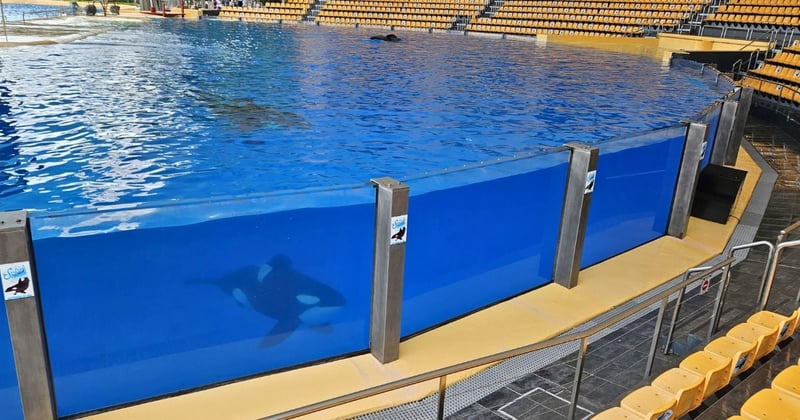
Wikie and her 11 year old son Keijo, the last remaining orcas from Marineland Antibes, are reportedly being considered for relocation to Loro Parque before the end of June. The development follows a visit by French minister Mathieu Lefèvre, although the transfer has not yet been officially confirmed.
It also remains unclear whether Spanish authorities have approved the move, despite earlier assessments suggesting the country does not have suitable facilities for orcas.
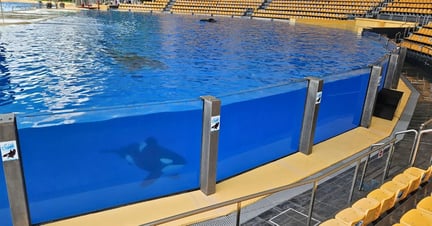
This potential transfer would be an incredibly disappointing step. The orcas, who remain confined in a closed theme park with dilapidated tanks the facility failed to maintain for years, urgently need proper support and care. They deserve placement in a facility capable of meeting their complex needs, not one that risks further exploitation.
A missed opportunity for a better future
When Marineland Antibes closed in January 2025, following new legislation to phase out captive cetacean entertainment, there was hope that Wikie and Keijo could eventually be moved to a seaside sanctuary.
Such sanctuaries aim to provide a more natural environment, allowing whales and dolphins to live in larger ocean spaces without being used for performances or breeding. However, the sanctuary project in Canada is still under development and not yet ready to receive animals. And discussions with the French government around the development of a European sanctuary for orcas have not been successful.
This exposes a wider failure in planning. While France took an important step in banning dolphin and whale shows, enabling long term solutions for animals already in captivity was ignored too long by authorities, leaving the future of captive cetaceans unknown.
Concerns over Loro Parque conditions
Loro Parque has faced ongoing criticism over the welfare of the animals it holds. The facility has seen four orca deaths since 2021 and was previously deemed inadequate by Spain’s scientific authority under CITES that found that Spain didn't have facilities suitable for the orcas.
Experts warn that introducing Wikie and Keijo into the existing group could destabilise an already fragile social structure. The park currently houses three adult orcas alongside the young calf, Teno, who was born in March 2025.
Teno has only recently been introduced to Tekoa and Adan, the two adult males at Loro Parque. It is unprofessional and irresponsible to now bring another two orcas into the mix.
Adding Wikie and Keijo will further destabilise the already fragile group at Loro Parque and likely lead to significant stress or aggression, with a young calf in the midst.
Loro Parque was already far from adequate for the current three adult orcas and a calf. Adding two new adult orcas will significantly worsen the situation and lead to suffering.
Marine mammal experts emphasise that orcas are highly intelligent, social animals that rely on stable family groups. Disruptions in captivity can lead to stress, aggression and long-term welfare issues.
You can make a difference for vulnerable animals
Donate now
When you make a donation, you’ll join a passionate group of supporters who are determined to change the world for animals. We're fighting animal cruelty wherever we find it — are you with us?
Click to donateBreeding programme adds to criticism
Further concern centres on Loro Parque's ongoing orca breeding programme.
Despite global scrutiny of captive breeding, the park has stated it has no plans to stop. This stands in contrast to wider industry shifts following public backlash over the treatment of marine mammals.
Teno, the park's most recent calf, was born to Morgan, an orca originally rescued from the wild with the intention of rehabilitation and release. Instead, she was transferred to Loro Parque, where she has since been used for performances and breeding.
There is the concern that if Wikie and Keijo are transferred, they may also be used in breeding and entertainment, despite the intent of French legislation to phase out such practices.
This is an incredibly disappointing move for these orcas.
We urge the French Ministry, who have been trying to find a solution for these orcas, to do all that they can to ensure that the intent of their legislation is followed and Wikie and Keijo are not used for breeding purposes.
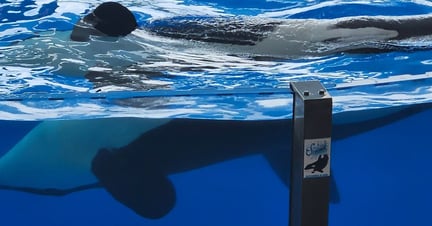
It is already tragic that these animals continue to face a lifetime in a tiny barren tank performing for tourists, let alone be used to perpetuate this cruel industry. It is more important than ever to make this the last generation of whales and dolphins in captivity.
Travel industry under scrutiny
The situation has also renewed scrutiny of the travel companies that continue to promote marine parks.
TUI Group, one of the world's largest tour operators, still sells tickets to Loro Parque despite updating its animal welfare policy. Continuing to promote such venues supports an industry that depends on captive breeding and performances.
We are calling on travel companies to end their links with attractions that keep whales and dolphins in captivity.
A crucial time for captive orcas in Europe
There are currently 55 orcas in marine parks worldwide, with only a small number remaining in Europe. If Wikie and Keijo are moved, all captive orcas on the continent would be held at a single facility.
Orcas are highly intelligent, social predators with complex family structures. It is widely recognised they cannot thrive in captivity.
Countries such as Mexico, Canada, France, and the state of New South Wales in Australia have all brought in bans on the keeping of whales and dolphins in captivity in the last six years, showing the growing movement of the public turning their backs on exploitation.
The decision made now will define whether Europe continues to move away from captive cetacean entertainment, or whether animals like Wikie and Keijo remain part of a system many believe should end.
Related content
Running free, sponsored by captivity?
Blog
From coastline races to captive dolphin shows, a contradiction sits at the heart of TUI-sponsored marathons in Palma, Rhodes and Cyprus.
Four-month-old orca calf Teno exploited in Loro Parque shows
News
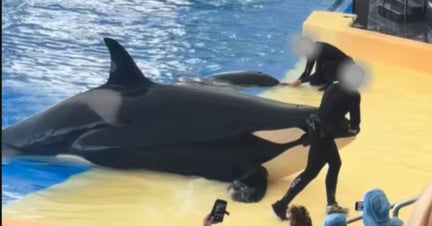
We are calling on TUI to stop selling tickets to Loro Parque after four-month-old orca calf Teno is filmed performing in shows.
Marine Wildlife at Risk - How We Can Stop Ocean Exploitation | World Animal Protectio
Blog
Learn how ocean exploitation is harming marine wildlife and what we can do to protect the oceans. Support marine conservation efforts to save vulnerable species.